
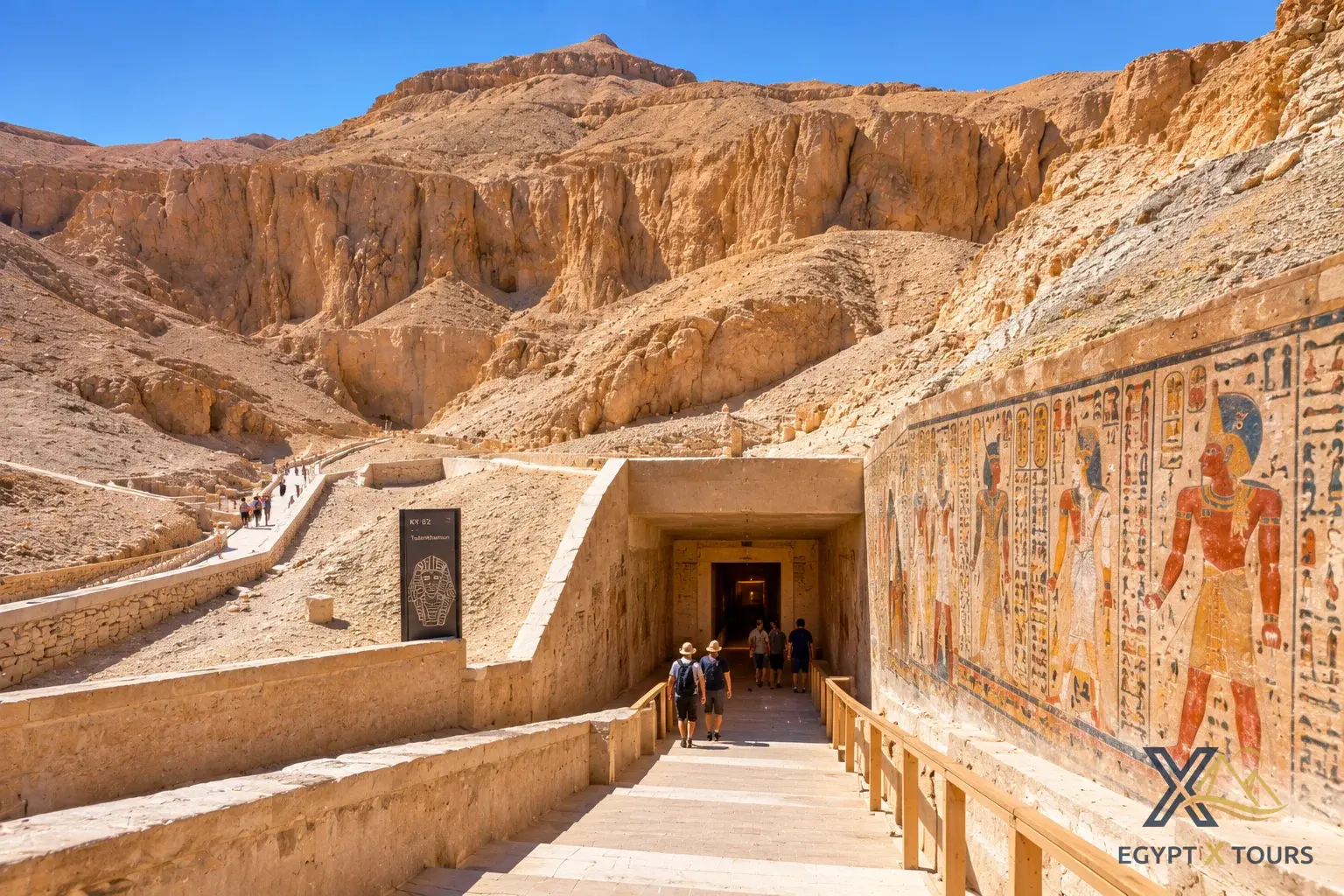
Explore the complete guide to KV62, the legendary tomb of King Tutankhamun in Luxor's Valley of the Kings. Discover its history, the boy king's golden treasures now housed in the Grand Egyptian Museum and Egyptian Museum in Cairo, exact visiting logistics, ticket prices, and 15 essential FAQs for travelers planning their ultimate Egyptian holiday with Egypt X Tours.
The Ultimate Guide to Tomb of Tutankhamun: History, Logistics
Welcome to the definitive travel masterclass on the Toot Ankh Amon Tomb (KV62), nestled deep within the legendary Valley of the Kings on the West Bank of Luxor, Egypt. Whether you are a history enthusiast or planning your bucket-list trip with Egypt X Tours, understanding the discovery, architecture, artifacts, and practical logistics of King Tutankhamun's final resting place will elevate your travel experience to extraordinary heights.
Location: Valley of the Kings, West Bank, Luxor, Egypt
Pharaoh: Tutankhamun (18th Dynasty, New Kingdom)
Discovered: November 4, 1922, by Howard Carter and Lord Carnarvon
Primary Artifacts Location: Grand Egyptian Museum (GEM) & The Egyptian Museum, Tahrir Square, Cairo
Admission Fee: Separate ticket required in addition to the standard Valley of the Kings pass (approx. 300 EGP / $10 USD)
Introduction to KV62: The Discovery of the Century
The discovery of the Toot Ankh Amon Tomb in 1922 by British archaeologist Howard Carter remains the most famous archaeological find in human history. Unlike almost every other royal tomb in the Valley of the Kings, which had been systematically looted in antiquity, Tutankhamun's burial chamber was found virtually intact, containing over 5,000 breathtaking artifacts.
The Boy King and the 18th Dynasty
King Tutankhamun ascended the throne around 1332 BC during Egypt's New Kingdom and died under mysterious circumstances at the young age of 19. His brief reign restored traditional Egyptian religion following the radical monotheistic reforms of Akhenaten. Though he was a minor pharaoh in historical terms, his undisturbed tomb provided modern civilization with an unmatched window into the wealth, art, and burial rituals of ancient Egyptian royalty.
Inside the Toot Ankh Amon Tomb: Architecture and Layout
The physical tomb of Tutankhamun is surprisingly modest in size compared to the grand tombs of Ramesside pharaohs like Ramses VI. Descending a steep flight of stairs from the sun-scorched desert floor, visitors enter a series of small, rock-cut chambers.
The Burial Chamber and Wall Paintings
The tomb consists of an entrance staircase, a descending corridor, an antechamber, an annex, the burial chamber, and a treasury. The walls of the burial chamber are famously adorned with vibrant, yellow-ground frescoes depicting scenes from the Opening of the Mouth ceremony and Tutankhamun accompanied by deities like Nut and Osiris.
Where Are Tutankhamun's Treasures Today?
While visiting the actual tomb in Luxor allows you to stand in the very spot where Howard Carter made his monumental discovery, the vast majority of Tutankhamun's legendary treasures have been relocated for preservation and exhibition.
The Grand Egyptian Museum (GEM) and Cairo Museum
Travelers visiting Cairo can marvel at the iconic solid gold death mask, golden shrines, chariots, jewelry, and royal furniture. The collection is progressively being centralized at the state-of-the-art Grand Egyptian Museum (GEM) near the Giza Pyramids, offering an awe-inspiring visual narrative of the young king's journey to the afterlife.
Practical Travel Logistics & Essential Tips
Planning a seamless journey to Luxor and the Valley of the Kings requires attention to detail. Here is everything you need to know to optimize your visit.
Best Time to Visit
The optimal months to explore Luxor and the Toot Ankh Amon Tomb are from October to April, when daytime temperatures are mild. To beat both the desert heat and the tour bus crowds, arrive at the Valley of the Kings ticket gate right at its opening time (typically 6:00 AM).
Getting Around Luxor
Navigating between East Bank hotels and West Bank monuments is best accomplished via private air-conditioned vehicles arranged by expert operators like Egypt X Tours. Crossing the Nile can also be done via traditional motorboats or local ferries.
Dress Code and Photography Etiquette
Respect local cultural norms by wearing lightweight, breathable, yet modest clothing that covers shoulders and knees. Photography rules inside KV62 and the museum galleries are strictly enforced; always verify whether a specific chamber permits mobile phone photos without flash.
Gallery 1
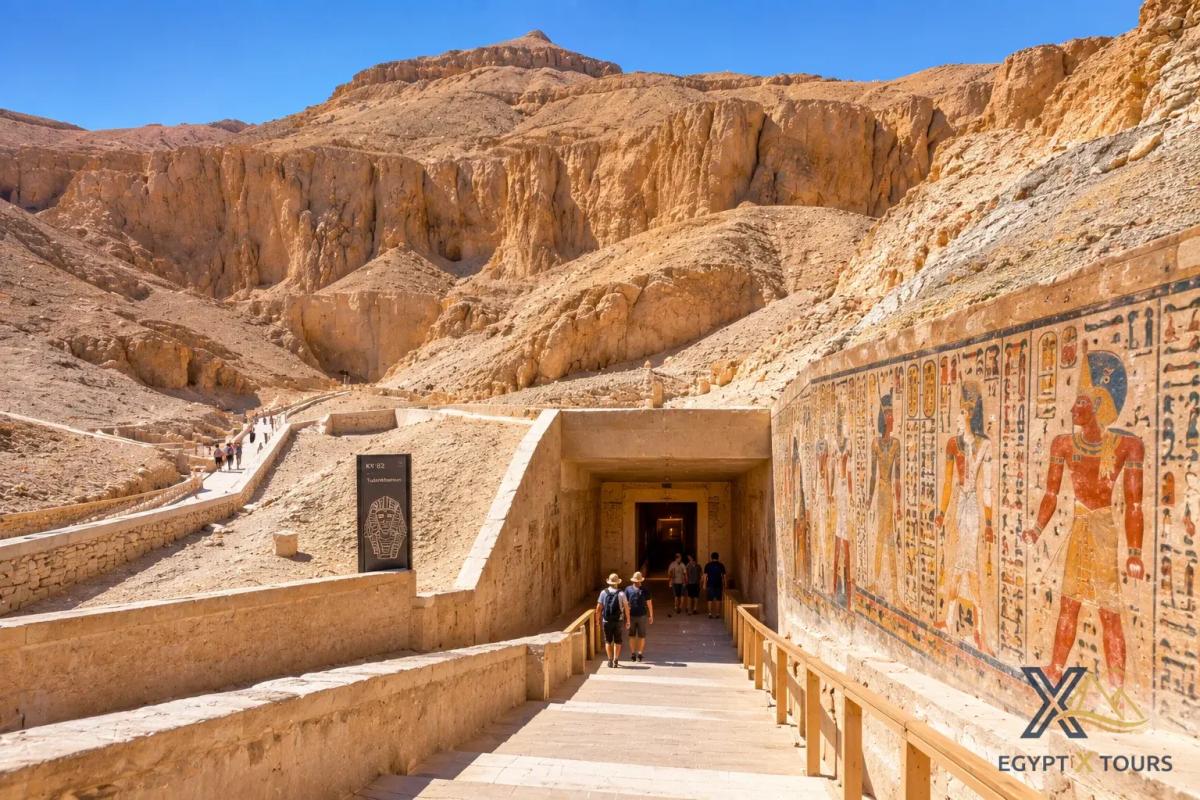
KV62 - Tomb of Tutankhamun
Travelers' Photos from Google Reviews
323 photos


Google Maps Visitor Reviews
Authentic verified reviews and feedback from visitors
Displaying 274 of 1,218 total reviews for this location. Explore all remaining traveler reviews directly on Google Maps.
FAQ
The Toot Ankh Amon Tomb (designated KV62) is located in the Valley of the Kings on the West Bank of Luxor, Egypt. Luxor is situated approximately 650 kilometers south of Cairo and can be reached via domestic flights, the overnight sleeper train, or a luxury Nile Cruise.
Visiting the actual tomb requires a separate special admission ticket in addition to the general Valley of the Kings admission pass. The ticket costs approximately 300 EGP (around $10 USD), subject to periodic adjustments by Egypt's Supreme Council of Antiquities.
No, the vast majority of the 5,000+ artifacts discovered by Howard Carter—including the famous solid gold mask, golden coffins, and jewelry—have been moved to Cairo. They are housed between the historic Egyptian Museum in Tahrir Square and the state-of-the-art Grand Egyptian Museum (GEM) near Giza.
The tomb was discovered on November 4, 1922, by British archaeologist Howard Carter, funded by his patron Lord Carnarvon. It marked one of the greatest archaeological breakthroughs in human history because it was found nearly intact.
Photography regulations within KV62 change frequently to preserve the delicate ancient wall paintings and environment. Generally, standard mobile phone photography without flash is permitted if you purchase an upgraded photo permit at the entrance ticket booth.
The best time to visit is early morning right when the site opens at 6:00 AM. Arriving early allows you to beat the intense midday desert heat and avoid large crowds of tourists arriving from Nile cruise ships.
A typical walk-through of Tutankhamun's tomb takes about 15 to 30 minutes, as the tomb is relatively small compared to other royal sepulchers in the valley. However, your entire visit to the Valley of the Kings should allocate 2 to 3 hours to explore multiple tombs.
Tutankhamun's tomb is world-famous because it was discovered almost completely unplundered by grave robbers in modern times. Finding thousands of intact royal treasures provided unprecedented insight into ancient Egyptian funerary art and wealth.
Travelers should wear loose, lightweight, modest clothing that covers shoulders and knees to respect Egyptian cultural traditions. Sturdy walking shoes are essential for navigating unpaved desert paths, stone staircases, and dusty archaeological sites.
Yes, you can visit Luxor and the Valley of the Kings on a day trip from Cairo by taking an early morning domestic flight to Luxor Airport. Egypt X Tours offers seamless, fully guided day excursions that include airport transfers, private Egyptologist guides, and entry tickets.
Tutankhamun was an 18th Dynasty Egyptian pharaoh who ruled circa 1332–1323 BC during the New Kingdom period. Often referred to as the 'Boy King,' he ascended the throne at approximately age nine and died around nineteen.
Inside the burial chamber, Howard Carter discovered nested gilded wooden shrines enclosing a red quartzite sarcophagus. Within this lay three nested coffins, the innermost of which was made of solid gold, containing the mummified remains of the king wearing his golden funerary mask.
Accessing KV62 requires descending a steep metal staircase with handrails into a subterranean rock-cut shaft, which can be challenging for visitors with severe mobility limitations. The Valley of the Kings terrain itself is unpaved and dusty, though electric tram carts operate between the visitor center and the tomb entrances.
Tipping, known locally as baksheesh, is an ingrained cultural custom in Egypt to reward good service. For private drivers, tour guides, and temple attendants, carrying small denominations of Egyptian Pounds (EGP) or USD cash is highly recommended.
You can book an expert-led, hassle-free private tour of Luxor and the Valley of the Kings directly through Egypt X Tours (https://egyptxtours.com). Their licensed Egyptologist guides ensure an immersive, educational, and perfectly organized historical journey.

Egypt X Tours
Author at Egypt X Tours