
Explore the majestic Luxor Temple on the banks of the Nile with our definitive travel masterclass. Discover its New Kingdom history, pharaonic architecture, evening illumination tips, ticketing details, and insider advice designed for discerning travelers exploring Egypt with Egypt X Tours.
Introduction to Luxor Temple: The Heartbeat of Ancient Thebes
Welcome to Luxor Temple, a magnificent architectural marvel that has stood at the heartbeat of ancient Thebes for over three millennia. As you step onto the historic East Bank of the Nile River, you are immediately enveloped in an atmosphere where ancient history breathes through massive sandstone blocks, towering columns, and colossal statues. Known to the ancient Egyptians as 'Ipet resyt' or the southern sanctuary, this breathtaking monument was not built for the worship of a state god in isolation, but rather for the rejuvenation of kingship and the annual Opet Festival, where the divine essence of Amun-Re, his consort Mut, and their son Khonsu traveled from Karnak Temple to reside here in divine union. When you travel with Egypt X Tours, experiencing Luxor Temple is transformed from a simple sightseeing stop into an immersive journey through time, culture, and enduring spiritual devotion.
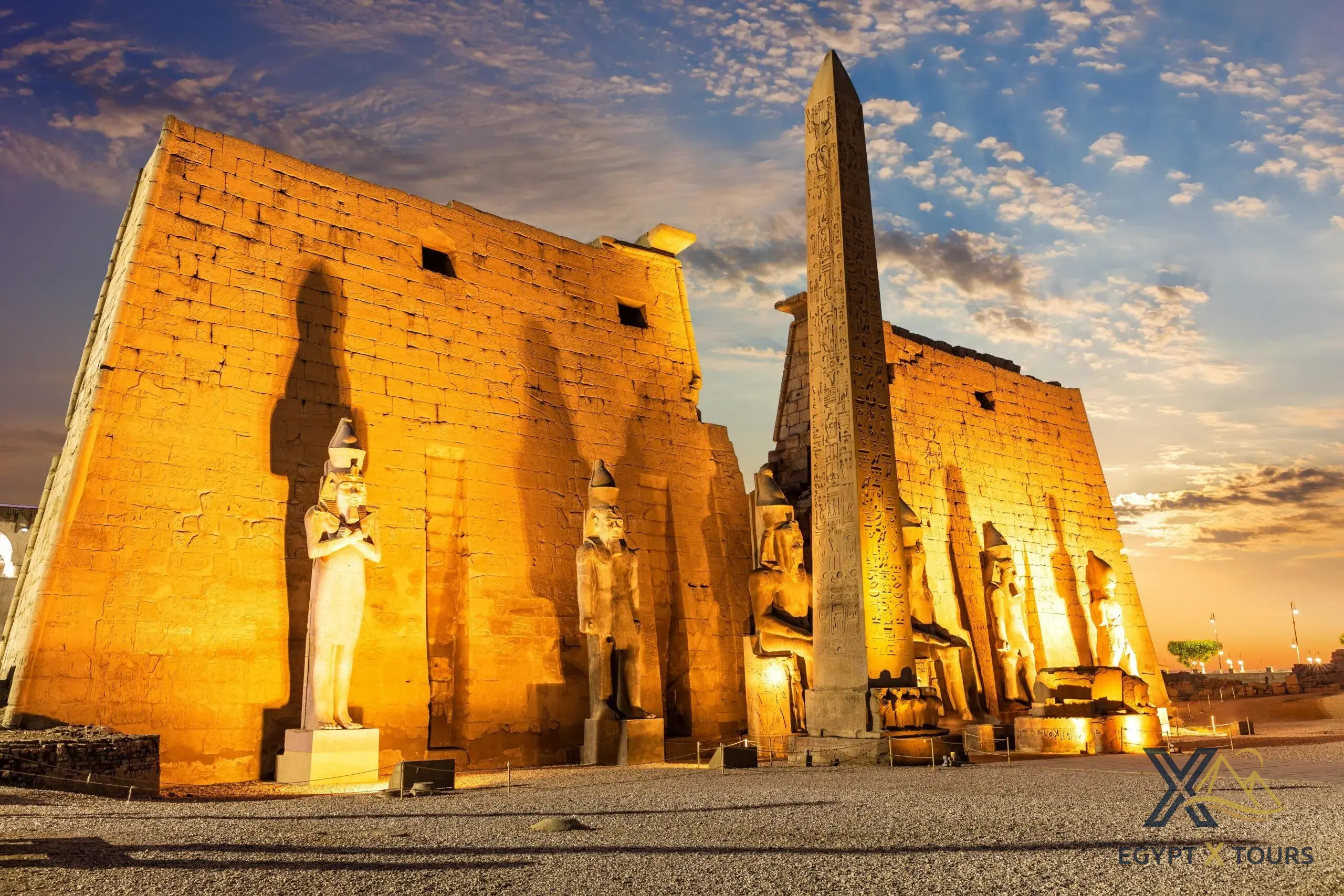
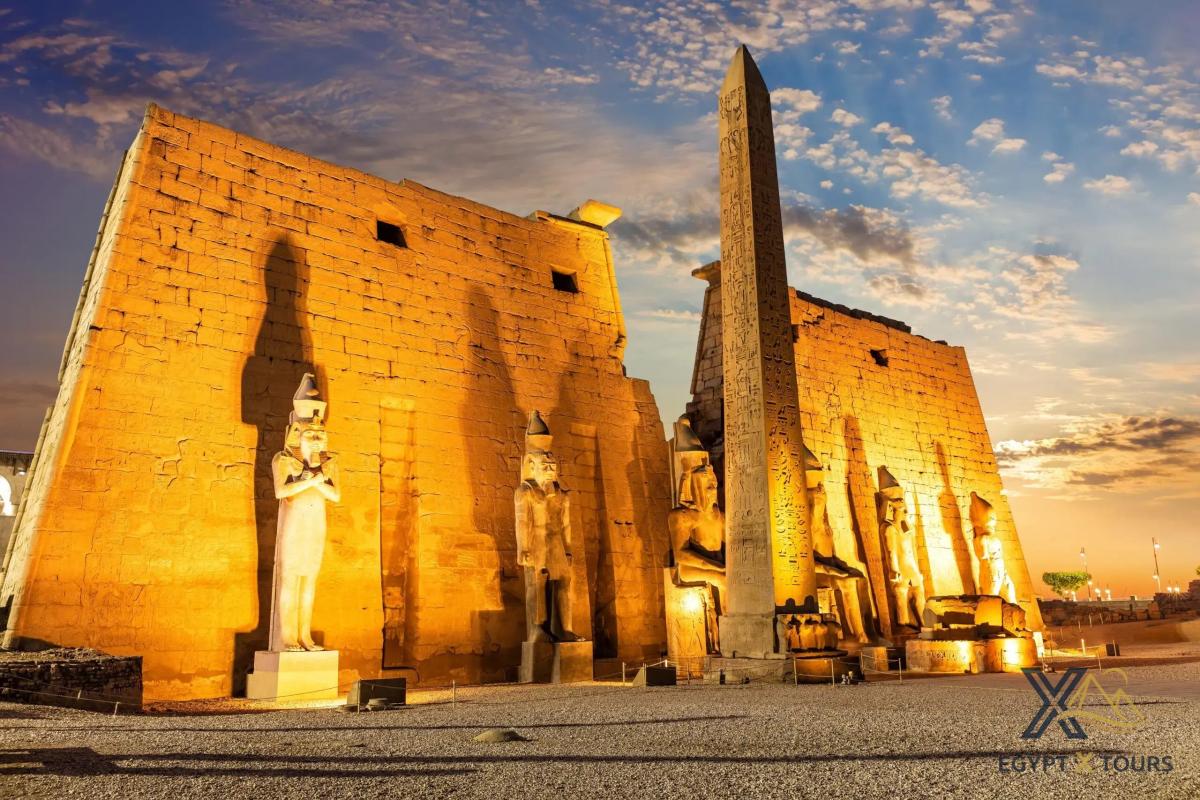
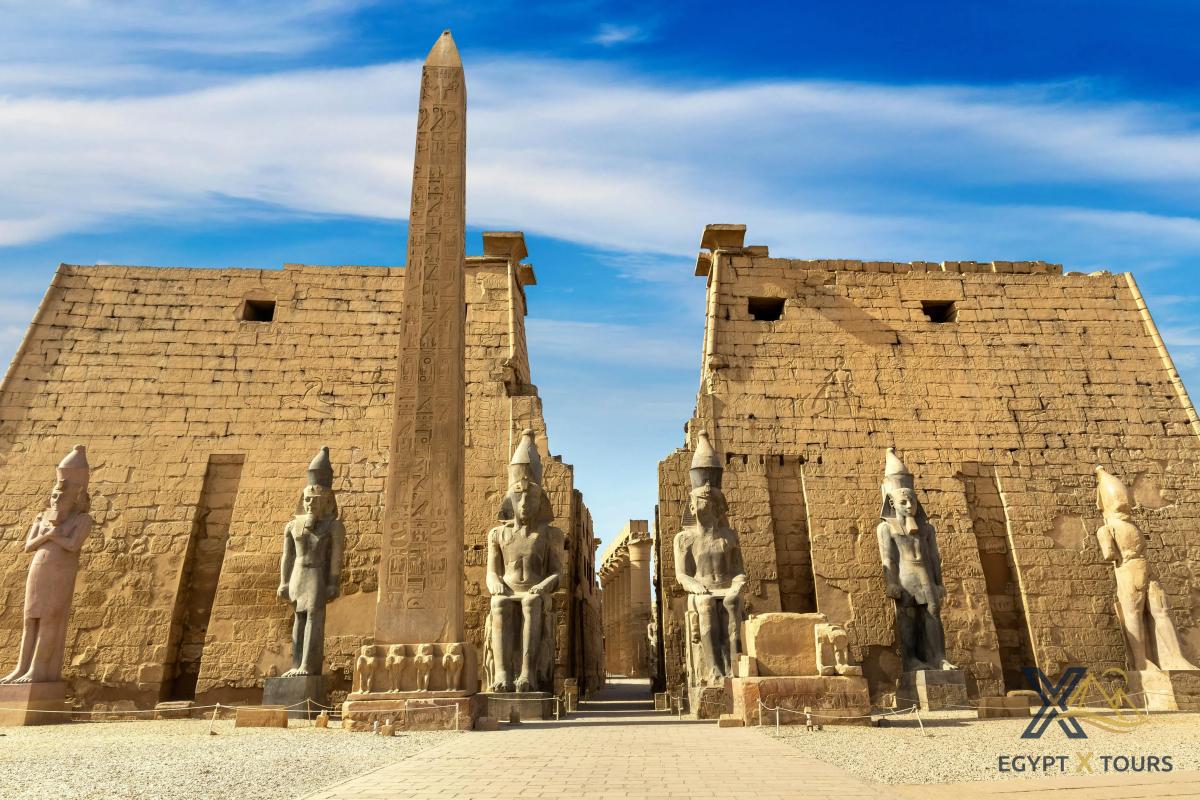
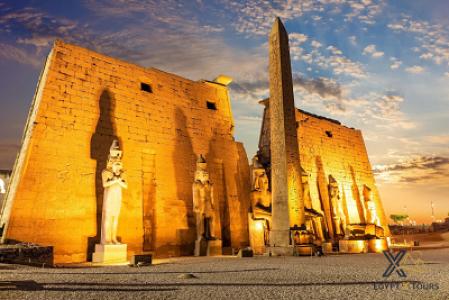
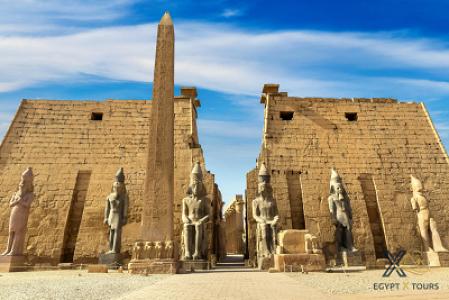
Spanning generations of construction, enlargement, and sacred reverence, Luxor Temple stands as a testament to the artistic genius and architectural ambition of New Kingdom pharaohs. Unlike many other temples in Egypt that were dedicated solely to funerary cults or a single reigning monarch, Luxor Temple served as the primary stage for royal coronations and the renewal of divine power. From the moment you approach its grand pylon gateway flanked by seated colossi of Ramesses II and the remaining towering obelisk, you begin to understand why this site captivated travelers, poets, and historians for centuries. The air is thick with the scent of ancient desert dust mixed with the gentle breeze of the Nile, creating an unforgettable sensory backdrop for your exploration of Egypt's glorious heritage.
To truly appreciate the grandeur of Luxor Temple, one must dive deep into its complex history, multi-layered construction phases, and profound religious significance. Conceived primarily during the 18th Dynasty under the reigns of Amenhotep III and later expanded by Tutankhamun, Horemheb, and Ramesses II during the 19th Dynasty, the temple exhibits a unique blend of harmonious classical elegance and colossal imperial propaganda. Later additions by Alexander the Great, Roman emperors, and even early Christian and Islamic communities demonstrate how Luxor Temple remained a living, evolving sacred space across successive civilizations. Whether you are walking through the Sun Court of Amenhotep III, marveling at the towering papyrus-bundle columns, or examining the intricate reliefs depicting sacred barque shrines, every square meter of this UNESCO World Heritage Site whispers tales of antiquity.
Navigating Luxor Temple requires both historical insight and practical logistical preparation to ensure an optimal experience. Situated directly in the modern downtown area of Luxor, the monument offers incredible accessibility, allowing visitors to combine daytime explorations with mesmerizing evening visits when the entire complex is dramatically illuminated against the desert night sky. However, beating the midday heat, managing ticket purchases, understanding local dress codes, and avoiding common tourist scams are essential skills for any modern traveler. In this comprehensive travel masterclass, we will provide you with all the expert knowledge, verifiable ground truths, practical tips, and logistical advice you need to make your journey to Luxor Temple an absolute masterpiece of travel planning.
As you plan your ultimate Egyptian getaway, remember that Luxor Temple is merely the shining jewel in a vast treasure trove of ancient wonders located along the Nile Valley. Combined with nearby Karnak Temple, the Valley of the Kings, the Valley of the Queens, and the Mortuary Temple of Hatshepsut, Luxor represents the unrivaled open-air museum of the world. Our mission at Egypt X Tours is to guide you through these legendary landscapes with unmatched expertise, personalized care, and seamless itineraries that honor the majesty of Egypt's pharaonic legacy while ensuring your absolute comfort and safety.
Location: East Bank of the Nile River, downtown Luxor, Egypt
Primary Builders: Amenhotep III (18th Dynasty) and Ramesses II (19th Dynasty)
Main Purpose: The annual Opet Festival and the rejuvenation of royal power
Estimated Ticket Price: Approximately $10 (Standard Adult)
Recommended Visit Duration: 2 to 3 hours
Best Time to Visit: Late afternoon (around 4:00 PM) to sunset or immediately after opening at 6:00 AM
Historical Evolution and Architectural Masterpieces
Luxor Temple is a masterpiece of New Kingdom architecture, characterized by its elegant proportions, soaring colonnades, and profound religious symbolism. Visitors exploring this monumental complex will encounter centuries of historical stratigraphy, where pharaonic piety blends seamlessly with Greco-Roman and medieval Islamic alterations.
The Great Pylon and the Avenue of Sphinxes
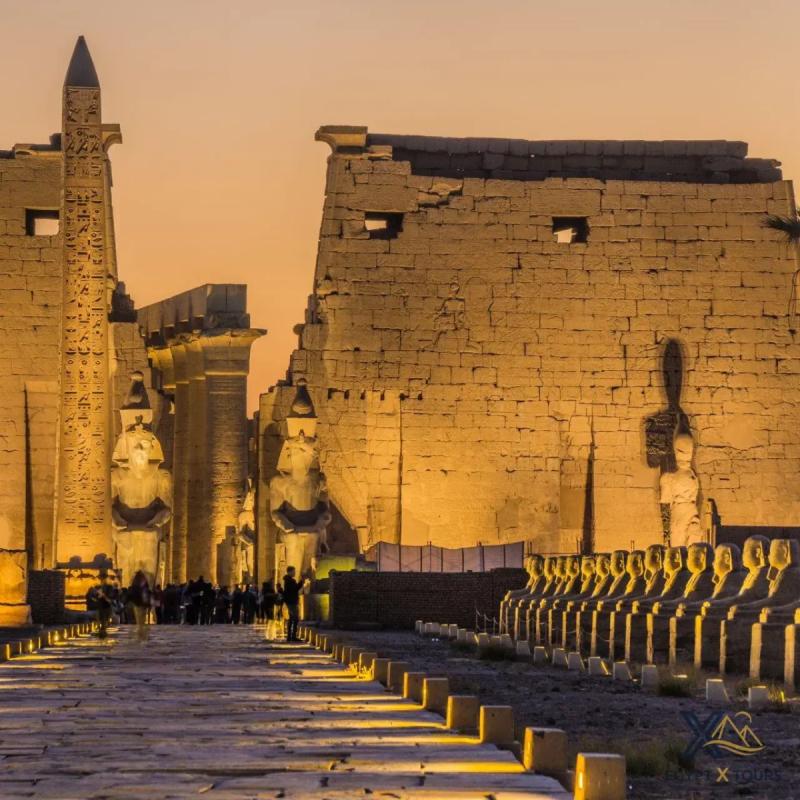
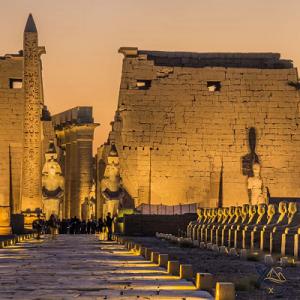
The monumental entrance to Luxor Temple is marked by the Great Pylon erected by Ramesses II, originally fronted by six colossal statues of the pharaoh and two towering pink granite obelisks, of which only one remains today, while its twin stands proudly in the Place de la Concorde in Paris. Leading northward from the pylon is the magnificent Avenue of Sphinxes, a 3-kilometer processional way lined with hundreds of human-headed and lion-headed sphinxes connecting Luxor Temple directly to the massive Karnak Temple complex.
The Court of Ramesses II and the Mosque of Abu al-Haggag
Beyond the pylon lies the expansive peristyle court of Ramesses II, surrounded by double rows of papyrus-bud columns and interspersed with colossal standing statues of the king. Perched dramatically above the northwestern corner of this ancient courtyard is the medieval Mosque of Abu al-Haggag, built on top of buried pharaonic structures to honor a revered local Sufi saint, illustrating the continuous sacred continuity of the site across millennia.
The Colonnade Hall and the Sun Court of Amenhotep III
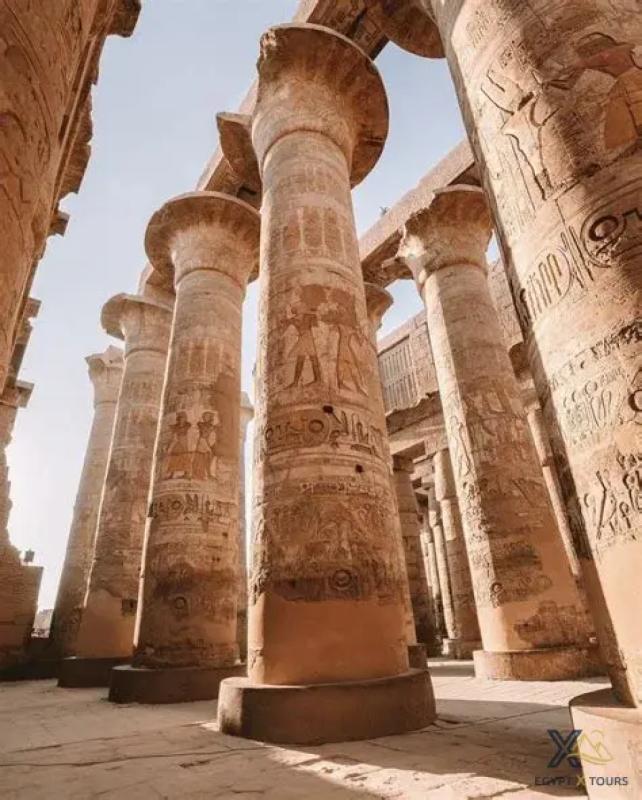
Proceeding deeper into the complex, visitors enter the breathtaking Colonnade Hall built by Amenhotep III, featuring fourteen soaring 16-meter-high open-papyrus columns that create a dramatic architectural rhythm. This leads directly into the Peristyle Sun Court of Amenhotep III, flanked on three sides by double rows of graceful lotus-bud columns, serving as the architectural heart of the pharaonic sanctuary.
Practical Logistics, Timing, and Visitor Tips
Mastering the practical logistics of visiting Luxor Temple ensures a smooth, enjoyable, and stress-free archaeological excursion along the Nile. Careful planning regarding operating hours, ticket purchases, and seasonal weather patterns will elevate your travel experience significantly.
Optimal Timing and Beating the Crowds
The best time to visit Luxor Temple is either early in the morning right at opening (6:00 AM) to enjoy the serene tranquility in cooler temperatures, or late in the afternoon (around 4:00 PM) transitioning into evening. Visiting in the evening offers a completely different perspective, as the sophisticated lighting system illuminates the soaring columns and statues against the dark desert sky, creating an enchanting atmosphere.
Tickets, Currency, and Financial Etiquette
Entrance tickets to Luxor Temple must be purchased using a credit or debit card at the official electronic ticket office near the entrance, as cash is generally not accepted for ticket sales. Visitors should also carry small denominations of Egyptian Pounds (EGP) for local tipping (baksheesh) when utilizing restrooms or interacting with local attendants, though professional guides from Egypt X Tours will always manage these details smoothly on your behalf.
Cultural Etiquette, Dress Code, and Photography
While Luxor is a welcoming tourist city, dressing modestly out of respect for local Islamic and traditional culture is strongly recommended, meaning shoulders and knees should be covered. Comfortable, sturdy walking shoes are mandatory due to the uneven ancient stone pavements and sandy courtyards. Photography is fully permitted throughout the complex using mobile devices and handheld cameras, though commercial tripods may require a special photography permit.
Gallery 4
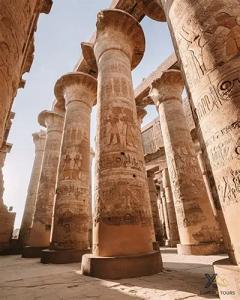
Luxor Temple
Travelers' Photos from Google Reviews
1886 photos


Google Maps Visitor Reviews
Authentic verified reviews and feedback from visitors
Displaying 563 of 35,025 total reviews for this location. Explore all remaining traveler reviews directly on Google Maps.
FAQ
Tickets to Luxor Temple cost approximately 400 Egyptian Pounds for adult foreign visitors, with student discounts available for holders of valid international student ID cards. All entrance tickets must be purchased cashless using credit or debit cards at the official site ticket windows.
Luxor Temple is open daily to the public from 6:00 AM until 10:00 PM throughout the entire year, including weekends and public holidays. Visiting during the evening hours provides a spectacular view of the illuminated statues and towering colonnades under the night sky.
Visiting Luxor Temple during late afternoon transitioning into evening offers the absolute best of both worlds, allowing you to examine detailed wall reliefs in natural daylight before witnessing the breathtaking nighttime illumination. Evening visits are cooler, less crowded, and visually stunning.
A comprehensive guided tour of Luxor Temple typically takes between 2 to 3 hours, providing ample time to explore the courtyards, colonnades, shrines, and the surrounding Avenue of Sphinxes with expert commentary from an Egyptologist guide.
Yes, Luxor Temple and Karnak Temple are frequently combined on the same day, as they are connected by the magnificent 3-kilometer-long Avenue of Sphinxes and located just a short drive or pleasant Nile-side walk apart. Most travelers visit Karnak in the morning and Luxor Temple in the late afternoon.
Visitors should wear lightweight, breathable clothing that covers shoulders and knees to respect local cultural norms, accompanied by comfortable walking shoes suitable for uneven ancient stone flooring and warm desert weather conditions.
While unguided visits are permitted, hiring a licensed Egyptologist guide through Egypt X Tours dramatically enhances your experience by unlocking the hidden symbolism, pharaonic history, and mythological stories behind the stone reliefs and architecture.
Luxor is easily accessible from Cairo via daily domestic flights to Luxor International Airport (LXR), comfortable overnight sleeper trains, or luxury multi-day Nile cruises departing from Aswan, offering diverse transit options for every traveler.

Egypt X Tours
Author at Egypt X Tours