
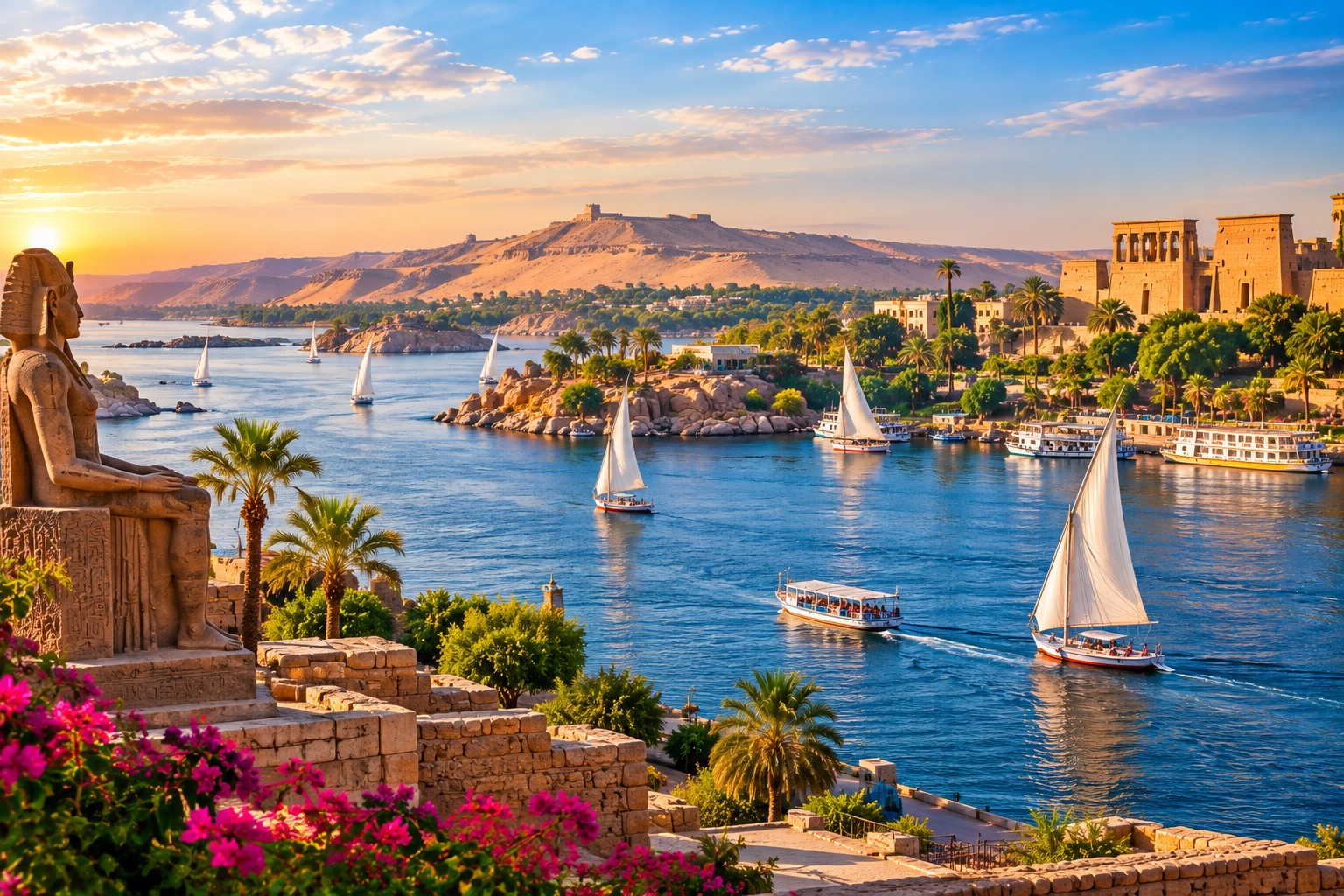
Discover the majesty of Abu Simbel, Egypt’s most awe-inspiring monument. From its monumental relocation to the celestial solar alignment, this guide covers everything you need to know for your 2024-2025 visit, including logistics, ticket prices, and expert insider tips for an unforgettable trip to Aswan.
The Ultimate Guide to Abu Simbel Temple: History, Logistics, and Sun Festival
Embark on an extraordinary journey to the magnificent Abu Simbel Temples in southern Egypt near Aswan. Built by Pharaoh Ramesses II, these monumental rock-cut temples stand as a testament to ancient architectural brilliance and modern engineering triumph. This comprehensive guide covers everything you need to know about visiting Abu Simbel, including history, ticket prices, best visiting times, getting there from Aswan or Cairo, and 15 frequently asked questions to plan your ultimate Egypt X Tours adventure.
Introduction to Abu Simbel Temple
Abu Simbel is an archaeological site comprising two massive rock-cut temples in Nubia, southern Egypt, near the border with Sudan. Commissioned by the powerful Pharaoh Ramesses II during the 19th Dynasty of the New Kingdom, these colossal monuments were carved out of a sandstone cliff around 1264 BCE as a lasting monument to himself and his principal wife, Queen Nefertari. Today, Abu Simbel is universally recognized not only for its breathtaking pharaonic artistry but also for its miraculous UNESCO-led relocation in the 1960s, saving it from the rising waters of Lake Nasser.
Location: Nubia, Southern Egypt (approx. 280 km southwest of Aswan)
Builder: Pharaoh Ramesses II (19th Dynasty)
Main Temple Dedication: Amun-Ra, Ra-Horakhty, Ptah, and the deified Ramesses II
Smaller Temple Dedication: Goddess Hathor and Queen Nefertari
UNESCO World Heritage Site: Listed since 1979
Key Highlight: The Sun Festival occurring biannually on February 22 and October 22
The Great Temple of Ramesses II
The Great Temple of Abu Simbel is one of the most awe-inspiring architectural achievements of the ancient world, dominating the Nubian landscape with its sheer scale and exquisite detail.
The Colossal Facade and Statues
The facade of the Great Temple features four magnificent seated colossi of Ramesses II, each standing approximately 20 meters (66 feet) tall, carved directly into the mountain rock. Flanking the pharaoh's legs are smaller statues representing members of his royal family, including Queen Nefertari, Queen Mother Mut-Tuy, and several of his princes and princesses. Notice how the second colossus from the left was partially damaged by an ancient earthquake, its upper torso lying shattered on the ground below, which adds a haunting layer of historical authenticity to the site.
The Hypostyle Hall and Sanctuary
Beyond the monumental entrance lies a grand hypostyle hall supported by eight towering Osiride pillars depicting Ramesses II fused with Osiris, the god of the underworld. The walls are covered in vibrant, deeply carved reliefs illustrating Ramesses II's military triumphs, most notably the Battle of Kadesh against the Hittites. Further inward, the sanctuary houses four seated statues of Ptah, Amun-Ra, Ramesses II, and Ra-Horakhty, perfectly aligned so that twice a year, the rising sun illuminates three of the statues while leaving the god of darkness, Ptah, perpetually in shadow.
The Temple of Hathor and Queen Nefertari
Situated just north of the Great Temple, the Smaller Temple is dedicated to the goddess Hathor and Ramesses II's beloved primary wife, Queen Nefertari.
Architectural Marvel of Equality
Uniquely in ancient Egyptian monumental architecture, the facade of the Temple of Hathor features six standing colossal statues of equal height—four representing Ramesses II and two representing Queen Nefertari. This rare architectural choice underscores the immense status, love, and political influence Queen Nefertari held during Ramesses II's sixty-six-year reign. The interior features a pillared hall decorated with scenes of divine offerings made by the royal couple to deities such as Hathor, Isis, and Mut.
The Epic UNESCO Rescue Operation
One of the greatest engineering feats of the 20th century, the rescue of Abu Simbel prevented the temples from being permanently submerged beneath Lake Nasser following the construction of the Aswan High Dam.
How Abu Simbel Was Saved
Between 1964 and 1968, an international coalition of engineers, archaeologists, and financial donors spearheaded by UNESCO meticulously cut the two temples into more than 1,000 massive blocks weighing up to 30 tons each. The entire complex was lifted 64 meters higher and 200 meters inland into an artificial mountain designed to replicate the original geographical topography. Today, visitors walk inside this modern concrete dome, completely unaware that they are standing inside an engineered masterpiece.
Practical Travel Guide & Logistics
Planning a seamless trip to Abu Simbel requires careful logistical coordination due to its remote desert location in southern Upper Egypt.
Getting to Abu Simbel
Travelers have three primary options to reach Abu Simbel from Aswan: private air-conditioned vehicle or tour transfer (a scenic 3-hour drive each way across the Nubian Desert, departing around 4:00 AM), domestic flight from Aswan International Airport (ASW) to Abu Simbel Airport (ABS), or multi-day Lake Nasser cruise ships that dock directly at the site.
Tickets and Opening Hours
Abu Simbel is open daily from 6:00 AM to 5:00 PM. Entry tickets cost approximately 750 EGP for adults (subject to periodic Egyptian Ministry of Tourism and Antiquities adjustments), with an additional fee if you wish to hire an expert Egypt X Tours private Egyptologist.
Frequently Asked Questions
What is the Abu Simbel Temple and who built it?
Abu Simbel is a complex of two massive rock-cut temples built by Pharaoh Ramesses II during the 19th Dynasty in the 13th century BCE. Located in southern Nubia, the temples were dedicated to the principal Egyptian deities and served as an eternal monument to Ramesses II and his queen, Nefertari.
How far is Abu Simbel from Aswan and how do I get there?
Abu Simbel is located approximately 280 kilometers (174 miles) southwest of Aswan. Travelers can reach the site by booking a private vehicle transfer or convoy tour (taking around 3 hours each way), taking a quick 45-minute domestic flight, or traveling via Lake Nasser cruise.
What are the operating hours and ticket prices for Abu Simbel?
Abu Simbel is open every day from 6:00 AM to 5:00 PM. General admission tickets cost around 750 EGP per adult, payable by credit card at the ticket office, while professional photography permits or specialized tours may incur extra charges.
When is the best time of year to visit Abu Simbel?
The best months to visit Abu Simbel are during the cooler winter season from October to April, when daytime temperatures are pleasant. Visiting early in the morning at 6:00 AM allows you to beat the desert heat and the arrival of large tour buses.
What is the Abu Simbel Sun Festival?
The Abu Simbel Sun Festival is an astronomical event occurring twice a year on February 22 and October 22. On these exact dates, the rays of the rising sun penetrate deep into the inner sanctuary of the Great Temple to illuminate three of the four divine statues.
Why were the Abu Simbel temples moved?
The temples were relocated between 1964 and 1968 to save them from rising waters caused by the construction of the Aswan High Dam and the formation of Lake Nasser. UNESCO coordinated a monumental engineering project that saw the temples cut into blocks and reassembled 65 meters higher.
Can you go inside the Abu Simbel temples?
Yes, visitors can enter both the Great Temple and the Temple of Hathor to explore the hypostyle halls, intricate wall reliefs, and inner sanctuaries. Photography without flash is generally permitted inside, though video recording may require a separate ticket.
How long does it take to tour Abu Simbel?
A typical guided tour of Abu Simbel takes between 1.5 to 2 hours on-site, allowing ample time to explore both temples, admire the exterior facade, and enjoy panoramic views overlooking Lake Nasser.
Is Abu Simbel safe for international tourists?
Yes, Abu Simbel and the surrounding Nubian region are extremely safe for tourists, supported by dedicated tourist police checkpoints along the highway between Aswan and Abu Simbel, as well as secure airport facilities.
What should I wear when visiting Abu Simbel?
Visitors should dress modestly out of respect for local Egyptian culture, opting for lightweight, breathable fabrics, a wide-brimmed hat, sunglasses, and comfortable walking shoes suitable for sandy and uneven stone surfaces.
Can I visit Abu Simbel as a day trip from Luxor or Cairo?
While possible from Luxor by combining a domestic flight or private transfer, visiting Abu Simbel is most easily done as a day trip or overnight extension from Aswan. Day trips from Cairo require a domestic flight via Aswan.
Are there local guides available at Abu Simbel?
Yes, licensed Egyptologist guides are available on-site, but booking a comprehensive tour package with Egypt X Tours ensures you receive an expert, certified historian to fully explain the intricate hieroglyphics and history.
Are there dining and shopping facilities at Abu Simbel?
The Abu Simbel visitor center features a modern tourist bazaar selling authentic Nubian handicrafts, papyrus art, and souvenirs, alongside clean restrooms and a cafeteria offering refreshments and light snacks.
What is the significance of Queen Nefertari's temple?
Queen Nefertari's temple is historically significant because it is dedicated to a royal wife and equated her with the goddess Hathor, reflecting the unprecedented respect and influence Nefertari held during the reign of Ramesses II.
Can I combine Abu Simbel with a Nile River cruise?
Absolutely! Many travelers combine a classic Cairo, Luxor, and Aswan itinerary with either a standard Nile cruise followed by a land excursion to Abu Simbel, or a specialized Lake Nasser cruise that docks directly at the temple site.
Gallery 1
Abu Simbel Temples
Travelers' Photos from Google Reviews
1432 photos


Google Maps Visitor Reviews
Authentic verified reviews and feedback from visitors
Displaying 400 of 21,006 total reviews for this location. Explore all remaining traveler reviews directly on Google Maps.

Egypt X Tours
Author at Egypt X Tours